
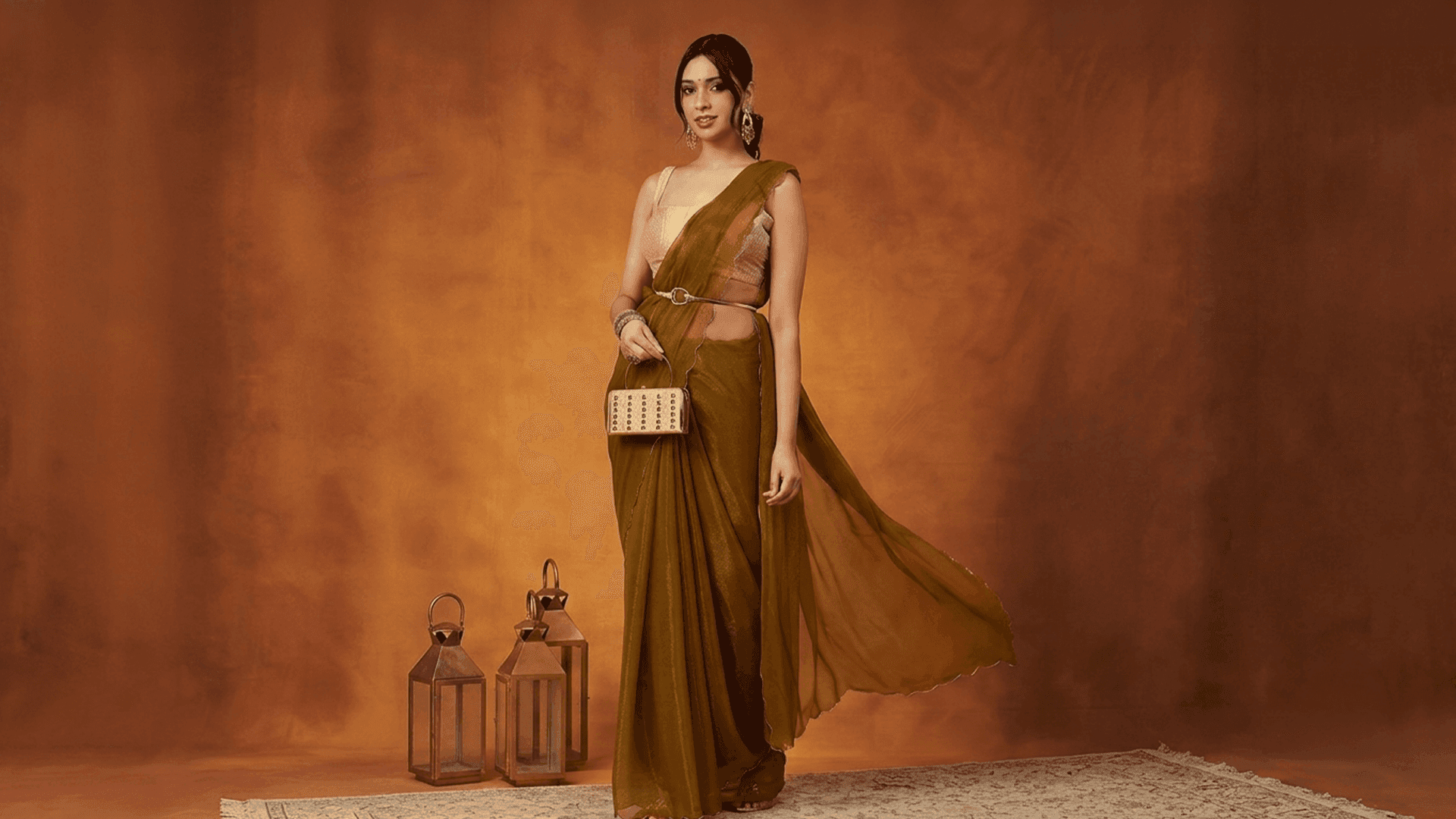

Organza is a light, sheer fabric with a crisp feel. It's made from tightly twisted yarns in a plain weave. Silk is the traditional yarn, but polyester and nylon versions are everywhere now. You'll spot it in sarees, blouses, dupattas and occasion wear, mostly because it looks delicate without losing its shape.
If you've ever wondered what is organza fabric and why it stays so neat even though you can see through it, it comes down to the weave and the yarn. Unlike soft, flowing fabrics that fall close to the body, organza has a certain firmness that helps pleats stay defined.
Floral prints, embroidered motifs, zari borders and subtle metallic finishes all work particularly well on its surface. And depending on the yarn, you can find anything from a rich silk version to a budget-friendly synthetic one.
Below, we'll go through the organza saree meaning, where the fabric comes from, the main types, how to spot a good one, how to style it and how to look after it. By the end, picking the right one should feel a lot easier.
What Is Organza Fabric? Origin & Weave
It is a fine plain-weave fabric known for its crisp hand, slight stiffness and sheen. Traditionally, it's associated with silk yarns, although polyester and nylon organza are widely available today.
The fabric gets much of its characteristic feel from tightly twisted yarns woven in a simple criss-cross structure. This creates a firm surface that doesn't collapse easily when draped or pleated.
Silk organza has long been a favourite for formal clothing because it's see-through and structured at the same time. These days, synthetic organza has made the fabric far more affordable. It's usually easier to wash too, which really matters if you don't want a saree that needs babysitting.
So, what is organza fabric in practical terms? Think of it as a see-through fabric with body. It keeps pleats relatively crisp and gives garments a sculpted appearance.
That makes it quite different from softer lightweight textiles. For example, georgette sarees offer a more fluid, slightly grainy drape, while organza tends to stand away from the body a little more.
Types of Organza Fabric
Organza comes in several forms depending on the yarn, surface treatment and decorative finish.
Silk Organza, Pure Silk Base
Made from silk yarn, this one is loved for its soft sheen and refined feel. You get that classic organza crispness along with the natural glow of silk.
People usually pick it for weddings, festive get-togethers and formal events. If you're comparing it with traditional silk sarees, silk organza generally feels lighter and more transparent while retaining a structured appearance.
Shimmer or Tissue Organza
Shimmer organza, sometimes called tissue organza, has a luminous surface created through the yarn or finishing technique used in the fabric. Depending on the construction, it may have a metallic-looking effect that becomes more visible under artificial or natural light.
This version works especially well for evening celebrations. A simple blouse and understated jewellery can be enough because the fabric already catches attention.
Embroidered and Floral Organza
Embroidered organza features threadwork, sequins, floral motifs or other surface decoration over the sheer base. Floral organza may instead use printed motifs, ranging from tiny scattered flowers to larger botanical designs.
The crisp surface gives printed and embroidered motifs a clean appearance. That's one reason organza remains popular for sarees where the print itself is meant to be the visual focus.
What Is an Organza Saree?
An organza saree is a saree made from organza fabric, giving it a feathery, clear appearance with a clean drape and good pleat definition. It can be made from silk, polyester or other synthetic yarns, depending on the design and price point.
The organza saree meaning goes beyond simply identifying the fabric. Its appeal comes from the combination of lightness and structure. The saree doesn't usually cling closely to the body, and its pleats can maintain a neat shape throughout an event.
Printed organza sarees are particularly versatile. A small floral print can work for daytime dressing, while sequins, zari or a richer border can shift the same fabric towards evening wear.
That's why an organza saree can fit into more than one wardrobe category.
How to Identify a Genuine Organza Saree
If you're shopping for organza, don't judge it only by shine. The texture says a lot.
- 01Look for a crisp hand: Organza should feel structured rather than limp or overly soft.
- 02Check the transparency: Real organza has a naturally transparent appearance, although the level of see-through effect varies by construction and layering.
- 03Observe the drape: When it's pleated, it should not fall flat against you.
- 04Check the surface: A gentle sheen is common, while an excessively glossy, plastic-like appearance may indicate a synthetic fabric with a different finish.
Fabric labels are still important. They can tell you whether you're buying silk organza, polyester organza, crepe sarees, or a blended construction.
How to Style an Organza Saree by Occasion
The styling can change the entire personality of an organza saree. The same fabric can look understated at work and dressed up at a celebration.
Party Wear, Sequinned Blouse and Statement Jewellery
For evening parties, pair a printed or shimmer organza saree with a sequinned blouse, metallic accessories or statement earrings. Keep the pleats sharp so the fabric's structure remains visible.
A sleek bun or soft waves finish the look without fighting the saree. If you're browsing party wear sarees, organza is worth a look when you want something dressy that isn't heavy.
Festive Wear, Zari Borders and Traditional Draping
For Diwali, Navratri, family pujas or festive lunches, choose organza with zari borders, floral motifs or traditional-inspired prints. A blouse in a contrasting colour can bring out the border without making the outfit feel too busy.
Traditional jewellery, jhumkas and a neatly pleated pallu work particularly well here. Browse festive wear sarees if you're looking for similar occasion-led options.
Office Wear, Minimal Prints and a Structured Blouse
Organza can work for office dressing when the design is restrained. Choose smaller prints, muted shades or solid colours, then pair the saree with a clean blouse and minimal jewellery.
Avoid excessive shimmer or very heavy embellishment for everyday professional settings. The fabric's natural structure already defines the outfit. Office wear sarees in fine-textured fabrics take a similar, practical approach.
Casual Wear, Solid Colours and Comfortable Draping
For casual days, look for easy-flowing synthetic organza in simple colours or delicate prints. A comfortable blouse, small earrings and an uncomplicated drape keep the outfit easy to wear.
It doesn't have to be elaborate. Sometimes a fresh colour and a neat border are enough. If everyday comfort is your priority, casual wear sarees can also help you compare other soft and airy fabric choices.
How to Care for Organza Sarees
Organza needs careful handling because its crisp structure can be affected by rough washing, heat and repeated folding.
For silk organza, dry cleaning is generally the safer choice. Avoid wringing the saree, even when the fabric feels sturdy. If you have to iron, keep the heat low and press on the reverse side or use a cloth in between.
After wearing it, let the saree air out before you put it away. Fold it carefully or roll it loosely rather than creating tight, repeated crease lines in the same place. Store it away from moisture and direct sunlight.
Synthetic organza may have simpler washing requirements, but always follow the care label first.
Shop Organza Sarees at Garden Vareli
Garden Vareli brings its experience in delicate, easy-to-manage sarees to a fabric that has a naturally polished look. If you like clear drapes, smooth prints and a saree that feels lighter than it looks, explore the organza sarees collection.
You can also browse the wider range of sarees to compare organza with other fabrics, prints and everyday styles. The right choice often comes down to where you'll wear it, how much structure you prefer and how much care you're comfortable giving the fabric.
Conclusion
From silk organza and shimmer finishes to floral prints and embroidered designs, there's plenty of variation within the fabric itself.
The best way to choose an organza saree is to start with the occasion, then consider the fabric type, print, border and care requirements. A simple floral version can become an everyday favourite, while zari or embellished organza can take you to a festive evening without feeling weighed down.
If you want that balance of graceful draping, colour and manageable wear, Garden Vareli's organza collection is a natural place to start.
Frequently Asked Questions
01.Is organza fabric transparent or see-through?+
02.Is an organza saree good for summer wear?+
03.What is the difference between organza and net fabric?+
04.Can organza sarees be worn daily or only for special occasions?+
05.What is the organza saree meaning in Indian fashion?+
end of story