
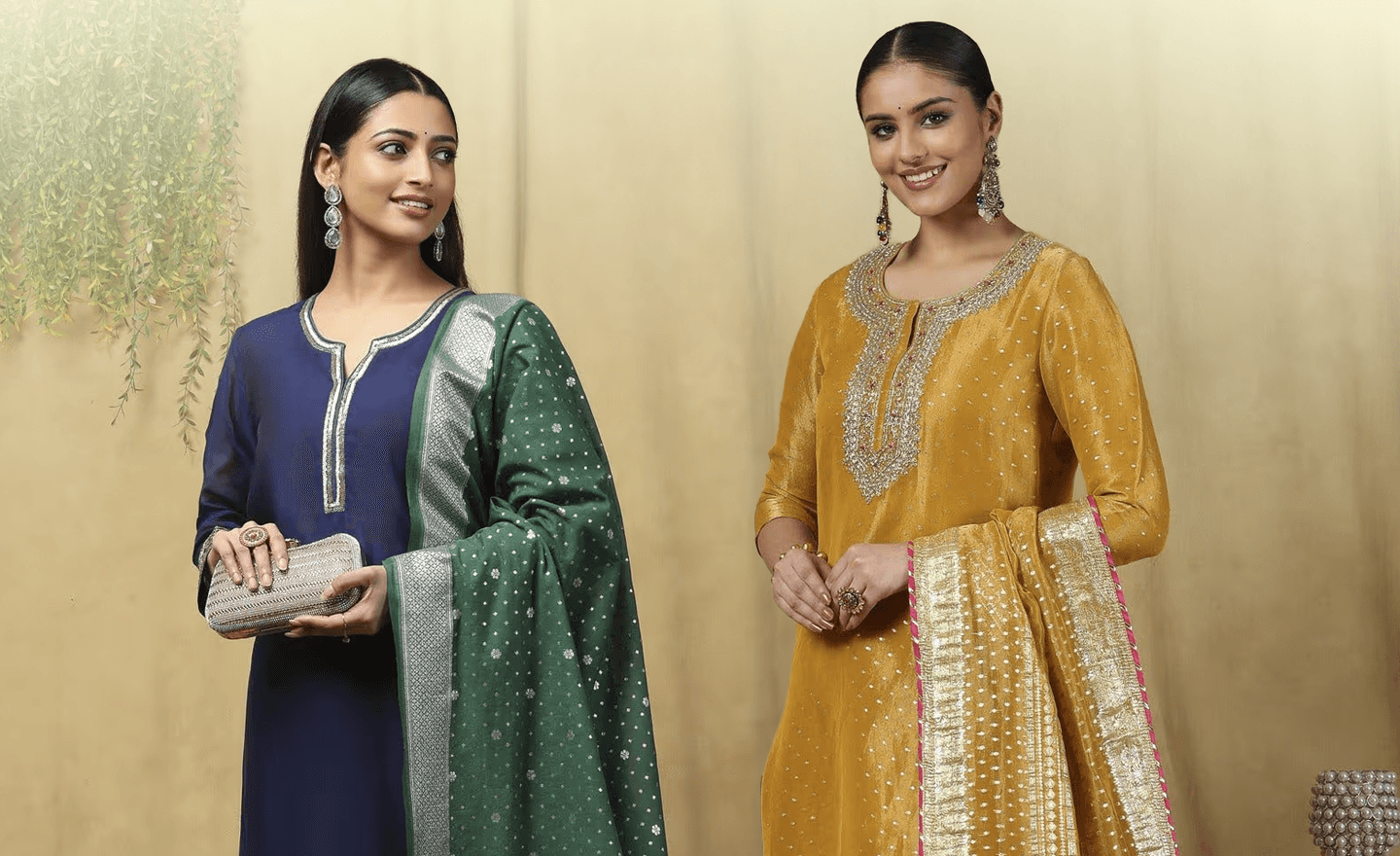
Ethnic wear is clothing rooted in a region’s cultural legacy, shaped by tradition, craftsmanship, and local ways of life, and carried forward across generations. India’s fashion identity is deeply rooted in culture, tradition, and diversity. The garments that make up ethnic wear have been passed down through generations. They play a major role in defining the spirit of a particular region, community, or country. To understand what ethnic wear is, you need to look beyond clothing; it represents heritage, regional identity, and lineages of craftsmanship. From the elegance of sarees to the versatility of kurtis, Indian ethnic fashion reflects the country’s vast cultural landscape.
This blog explains the meaning of ethnic wear, its historical roots, the types of ethnic wear for women, and how to choose the right styles for different occasions. This offers a clear perspective on what ethnic wear for women is today.
Ethnic Wear Meaning: Understanding Traditional Indian Fashion
Ethnic wear includes garments influenced by a community’s cultural legacy and traditional practices. The meaning of an ethnic dress, in a global sense, points to attire that reflects heritage and distinguishes one culture from another.
However, the meaning of Indian ethnic wear carries deeper value. It connects people to their roots through fabric, design, and style. Sarees, kurtas, and lehengas are not just outfits. They represent a culture passed down over generations.
Thus, the definition of ethnic wear in simple terms is clothing inspired by traditional Indian styles that people still wear today. It can be classic or slightly modern, but it always keeps a cultural base.
History of Ethnic Wear
Indian clothing dates back thousands of years. Early garments came from the Indus Valley period, where people wore draped fabrics. Eventually, royal dynasties influenced how people dressed. The Mughals brought in detailed embroidery, rich fabrics, and layered styles. Different regions then added their own unique touch to clothing. South India had focused on silk sarees. Gujarat and Rajasthan brought in tie-dye and mirror work. Over time, these styles blended with modern fashion. Today, ethnic wear keeps its traditional feel but is made for comfort and everyday use.
Types of Ethnic Wear for Women in India
India offers many different types of Indian outfits, each suited for a specific purpose. The types of ethnic wear for women range from simple daily wear to detailed occasion outfits.
Sarees
Sarees are one of the most recognised forms of ethnic dresses in India. A saree is a long fabric draped in different styles. It suits formal events, festivals, and daily wear. Georgette sarees are easy to wear and versatile, they suit both daily wear and small gatherings. Chiffon sarees are light and elegant, they work well for parties, events, and evening occasions.

Salwar Suits
Salwar suits are practical and widely worn. They include a kurta, bottoms, and a dupatta. They give comfort for everyday wear while still maintaining a neat and graceful look.

Lehengas
Lehengas are usually worn for weddings and major events. They include a skirt, blouse, and dupatta. These outfits often use heavy embroidery and rich fabrics.

Kurtis & Kurtas
Kurtis and kurtas are easy to wear and style. They are popular for office and casual use. You can pair them with jeans, leggings, or palazzos.
Dupattas & Ethnic Accessories
Dupattas complete many outfits. Accessories like bangles, earrings, and bindis add detail. These small elements define the final look.
Why is Ethnic Wear Important in Indian Culture?
Ethnic wear connects people to their roots. It usually plays a major role in festivals, weddings, and rituals.
Each outfit reflects a region’s identity and tradition. Wearing ethnic clothing during celebrations shows respect for culture. It usually creates a sense of belonging across generations.
How to Choose the Right Ethnic Wear for Different Occasions
Choosing the right outfit usually depends on the event, comfort, and style.
For Weddings
Pick sarees or salwar suits with detailed work. Such outfits match the scale of wedding events.
For Festivals
Choose bright colours and light fabrics. Printed sarees or simple salwar suits work very well.
For Office Wear
You may go for lightweight sarees or subtle kurtis. These look professional and stay comfortable through the day.
For Casual Wear
Wear simple kurtis or lightweight sarees. These are easy to manage and style daily.
Difference Between Ethnic Wear and Traditional Wear
The difference between ethnic wear and traditional wear is quite simple. Traditional wear stays close to its original form, while ethnic wear adapts to modern lifestyles.
|
Aspect |
Traditional | Ethnic |
| Definition |
Stays close to its original form, just as it has been worn over time. |
Includes these traditional styles along with modern updates and everyday variations. |
| Usage | Mainly worn during rituals, ceremonies, and cultural events. | Can be worn for daily use, work and casual occasions. |
| Design | Follows strict cultural styling. | Permits design changes, new cuts, and fusion elements. |
| Comfort | Outfits may not always be practical for daily use. | Designed to be more comfortable. |
| Styling | Styled in a set way. | Gives more freedom to style it differently. |
| Relevance Today | Preserves heritage in its pure form. | Keeps that heritage alive while adapting to current needs. |
Modern Trends in Indian Ethnic Wear
Indian fashion continues to change with time. Fusion wear mixes Western and Indian styles. Kurtis with jeans is a common example. Minimal sarees with light designs are now popular for daily wear. Many brands use eco-friendly fabrics like cotton and linen. Digital prints add variety and keep designs fresh. These changes show how ethnic wear types adapt without losing their cultural base.
Conclusion
Understanding what ethnic wear for women is brings clarity to how tradition and everyday style come together. From sarees to kurtis, each outfit reflects culture in a way that fits into modern life.
In this space, Garden Vareli holds a steady presence. We focus on fabric quality and designs that feel easy to wear rather than trend-driven. This makes our sarees practical choices for regular use, and not just special occasions. Our collections include printed sarees, pieces suited for events, and more. The designs stay balanced, avoiding extremes, which permits our brand to appeal across age groups. Over time, this consistency has built a sense of trust in the range.
Frequently Asked Questions
01.What is ethnic wear in India?+
02.What is the difference between ethnic and western wear?+
03.What are the main types of ethnic wear for women?+
04.What fabric is best for ethnic wear?+
05.Which ethnic wear is best for daily use?+
end of story