
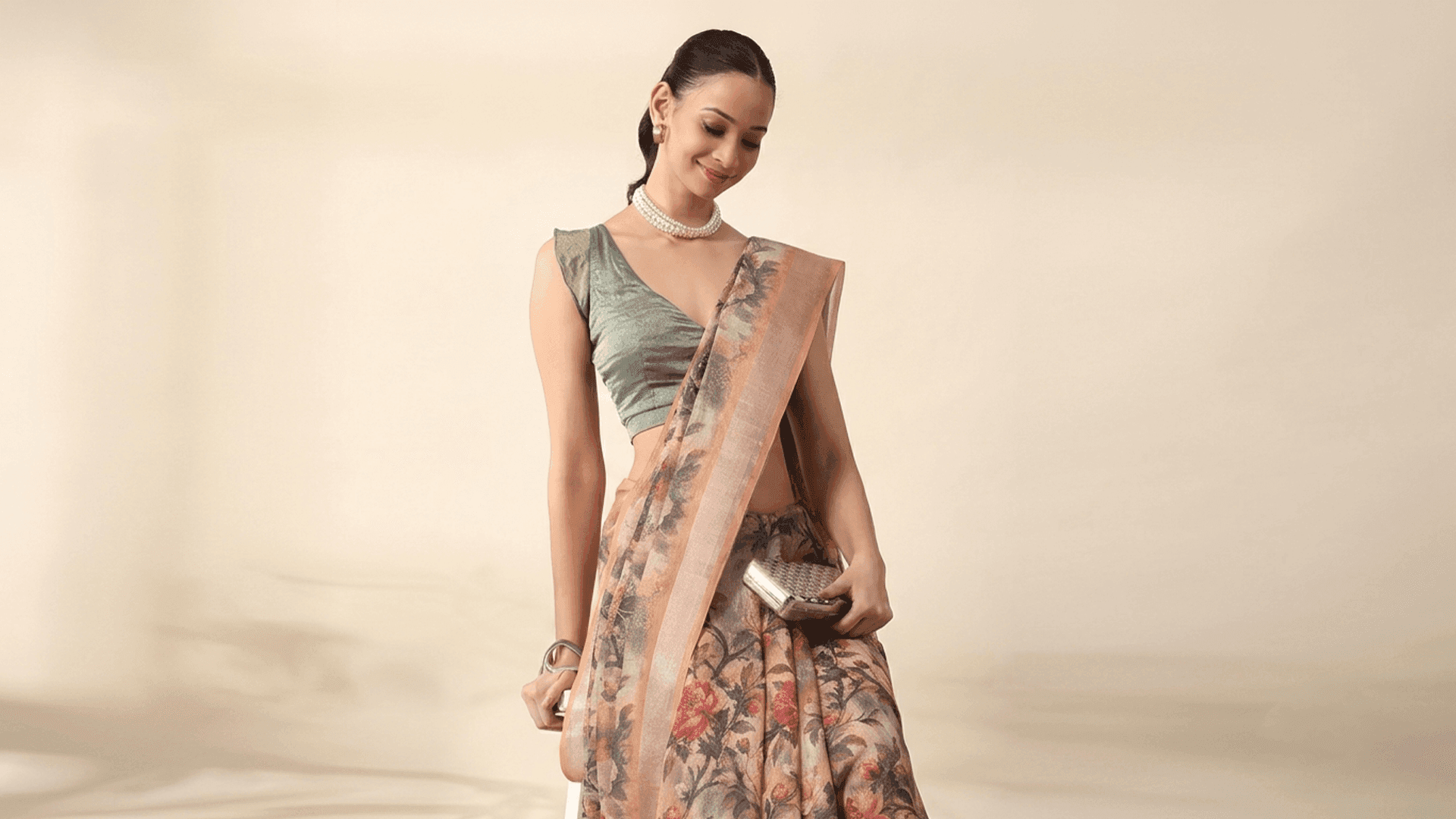

Chanderi fabric comes straight out of Chanderi in Madhya Pradesh, and it's honestly one of the lightest, airiest textiles you can wear. Fine zari motifs often decorate it. It looks slightly see-through and carries woven patterns that have made it a big favourite for Indian sarees. So if you've been wondering about the chanderi fabric meaning, here's the short answer: it's a fine, translucent handwoven textile linked to the old weaving town of Chanderi.
But there's more to it than a pretty, light drape. The yarn, the weave, the motifs, and the finish all change how a Chanderi saree looks and feels once it's on you.
In this guide, you'll learn what is chanderi fabric, how its three main varieties differ, what makes a Chanderi saree distinctive, and how to identify and care for one. If you're comparing sarees, these details can make choosing much easier.
What Is Chanderi Fabric? Origin & Weave
Chanderi is that light, breezy fabric from a small historic town in Madhya Pradesh that local weaving families have been making by hand for ages. It has this soft sheen and slightly sheer look, making it famous for anyone who loves traditional Indian wear.
We've all been there. You get invited to a family function, buy a heavy saree, and spend the entire day suffocating under thick fabric and stiff borders.
That's why people love Chanderi. It gives you all the elegance and rich look of traditional festive wear without making you feel weighed down or overheated. The open weave lets the air pass right through, so you stay completely comfortable from morning prayers to late-night dinners. It wraps nicely, feels weightless, and keeps you looking effortlessly put together. Traditional Chanderi textiles can use silk and cotton yarns in different combinations. Small motifs, often called butis, are woven directly into the fabric rather than being added later as surface embroidery, making them ideal for festive wear sarees.
Compared with georgette sarees, Chanderi can have a somewhat crisper handle and a more structured fall, while still feeling remarkably light.
The chanderi fabric meaning, therefore, isn't simply "silk fabric" or "cotton fabric." Chanderi describes a traditional textile and weaving identity, with different yarn compositions producing different versions of the fabric.
Types of Chanderi Fabric
Chanderi comes in three main forms, based largely on the yarn combination used in the weave.
Chanderi Silk: Pure Silk Warp & Weft
Chanderi silk uses silk yarn in both the warp and the weft. You get a refined sheen, a soft drape and a smooth feel against the skin. It looks dressier than cotton Chanderi, so a lot of people pick it for festive sarees and special occasions. If you're weighing it against other silk sarees, remember that the meaning of Chanderi silk is more about an airy, light character than a heavy fall.
Chanderi Cotton: All-Cotton, Breathable Weave
Chanderi cotton is woven with cotton yarn, and it's loved for feeling light and breathable. It works particularly well for daytime dressing, warm-weather occasions and people who prefer a saree that doesn't feel cumbersome after several hours. Its crisp texture also gives the saree a neat, graceful shape.
Silk-Cotton Chanderi: Silk Warp, Cotton Weft
Silk-cotton Chanderi pairs a silk warp with a cotton weft. It sits in the middle, with a bit of silk's shine and a bit of cotton's breathability. Handy when you want the classic Chanderi look but can't decide between all-silk and all-cotton.
What Is a Chanderi Saree?
A Chanderi saree is simply a saree made from Chanderi fabric. It is recognised for its lightweight, translucent drape, fine texture and traditionally woven motifs. Depending on the yarn composition, it can range from an airy cotton saree to a more lustrous silk or silk-cotton version.
Traditional designs often include coin, floral and peacock motifs, with zari used on the border, pallu or body. The result is festive without necessarily looking heavy.
That's why Chanderi sarees work across occasions. A cotton version can suit daytime gatherings or workwear, while silk and silk-cotton styles can fit festive dinners, family celebrations and other special events. Pair one with a simple blouse and jewellery, and the fabric itself does much of the visual work.
For a more detailed comparison between what is a Chanderi saree and other textiles, readers can also explore a types of saree fabric guide before choosing a weave.
How to Identify a Genuine Chanderi Saree
If you're shopping for Chanderi, don't judge it by shine alone. A few practical details can help.
- 01Look at the texture: Genuine Chanderi has a characteristic fine, lightweight and slightly crisp feel, rather than the uniformly smooth feel of many synthetic imitations.
- 02Check the motifs: Traditional butis and zari motifs are part of the weave itself. They aren't printed on or embroidered over the surface.
- 03Observe the transparency: It usually has that soft, see-through look, though how clear it gets depends on the yarn they used.
- 04Ask about origin and certification: Ask the seller directly whether it has a GI tag from Madhya Pradesh.
Organza sarees might look similar at first glance, but the soft texture and weave of real Chanderi feel completely different in your hands.
How to Care for Chanderi Sarees
Chanderi needs gentle handling, especially if there's zari or the weave is very fine. Dry cleaning is always your best bet, especially when there's metallic zari thread that can snag or lose its shine. If the saree needs some air, keep it out of strong direct sunlight for long stretches.
Once it's fully dry, fold it neatly and store it in a clean muslin cloth, particularly when zari is involved.
The same careful approach is useful for other lightweight fabrics, including crepe sarees. Don't leave delicate sarees crumpled in storage for long periods.
Shop Chanderi Sarees at Garden Vareli
Looking for lightweight sarees with an elegant drape? Chanderi is worth a look alongside the other fabric choices in the Garden Vareli sarees collection. Think about where you'll wear it, how much sheen you like, and whether you'd rather have cotton, silk or a blend.
If you're shopping around for upcoming weddings or pujas, take a look at party wear sarees so you can feel how different fabrics drape against your skin.
Conclusion
The chanderi fabric meaning comes down to a traditional textile known for its lightness, translucency, fine weave and woven motifs. Its three main forms, Chanderi silk, Chanderi cotton and silk-cotton Chanderi, give saree shoppers different options for sheen, breathability and drape.
If you're buying a Chanderi saree, look beyond the label. Check the fabric's texture, woven motifs, origin and care requirements. Once you know what you're looking at, choosing the right Chanderi becomes much simpler.
And that's where the fabric gets interesting. A saree can be traditional without feeling heavy or difficult to wear. Garden Vareli brings that same idea of practical Indian dressing into a wider selection of sarees, giving you room to choose a fabric that fits both the occasion and your everyday style.
Frequently Asked Questions
01.Is Chanderi a silk or cotton fabric?+
02.Is Chanderi fabric good for summer wear or winter wear?+
03.How do I tell if a Chanderi saree is handwoven or machine-made?+
04.Is Chanderi fabric transparent or see-through?+
end of story