
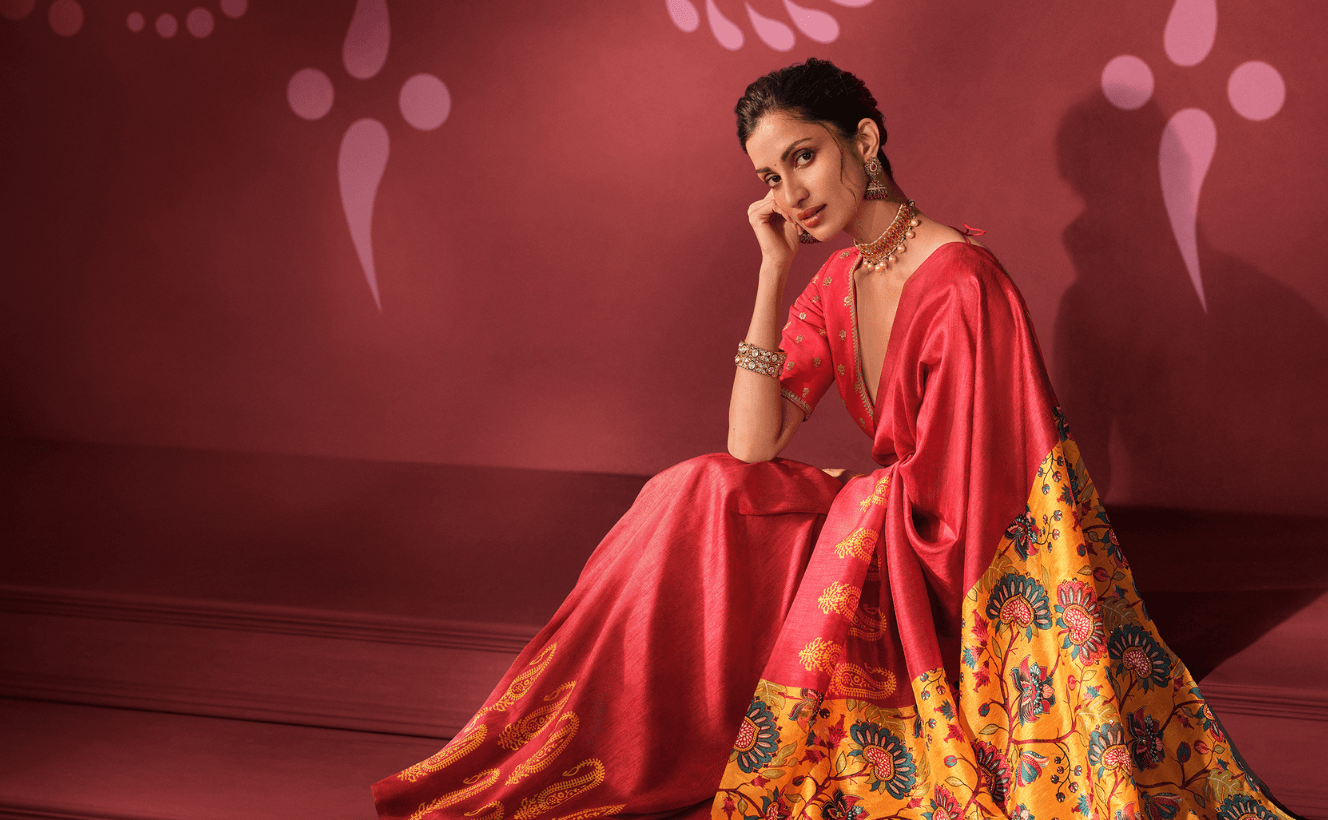
A saree is a long, unstitched piece of fabric worn with a blouse and petticoat. If someone asks what is a saree, the short answer is simple. It is a draped garment. The fuller answer carries more warmth. The saree meaning sits in dress, memory, region, and occasion.
People often describe it only by length or material. That leaves too much out. A better saree description includes the cloth, the drape, and the life around it.
What is a Saree?
If you want to define saree properly, think of three things: fabric, structure, and cultural place. A saree is usually five to nine yards long and is worn with a blouse and petticoat. Yet the saree meaning goes beyond measurements.
The full look has three parts: the blouse, the petticoat, and the main drape. Together, they create the shape most people picture when they ask what is a saree. The garment can feel simple on one day and ceremonial on another. That shift is part of its meaning too.
For many women, a saree holds memory. It can belong to daily life, a wedding morning, a puja, or a family gathering. If we define a saree only as cloth, we miss the feeling it carries. That is why the saree description needs room for identity as well.
A Brief History of the Saree
The history of saree reaches back more than 5,000 years. Many writers connect its early form to the Indus Valley Civilization, where draped clothing already appeared in visual records. The origin of the saree is tied closely to South Asian weaving traditions.
As courts, trade, and local craft traditions changed, the garment changed too. This is where saree history becomes especially interesting. Silk weaving, zari work, and regional dye methods shaped how different sarees came to look and feel.
The history of the saree is not only about age. It is about continuity. Through many shifts in fashion and trade, the drape stayed. That long thread is part of the saree meaning today. The saree history is still visible in the way women wear, gift, and remember it.

Different Fabrics Used in Sarees
Not all sarees feel the same in your hands. The saree material type affects drape, comfort, movement, and occasion. Some saree fabrics feel airy and easy. Others feel richer and more formal.
Crepe and Satin Sarees
Crepe and satin sarees are often chosen for a dressed-up look. Crepe falls softly and sits neatly on the body. Satin brings a soft shine, so it works well for receptions and festive gatherings.
Georgette and Chiffon Sarees
Georgette and chiffon sarees are among the easiest saree fabrics to wear for long hours. They feel light, move easily, and do not add much bulk. That is why they appear so often in festive and party styles.
Organza and Designer Fabric Sarees
Organza has a crisp feel and a more defined drape. Designer fabric sarees often add prints, embroidery, or surface detailing, which makes them popular for weddings and dressier events.
Brasso Sarees
Brasso sarees stand out for their textured, patterned surface. They look festive but do not usually feel too heavy, which makes them a good fit for family functions and semi-formal occasions.
Viscose Sarees
Viscose sarees are liked for their soft feel and smooth fall. They suit office wear, small occasions, and regular use.
Regional Saree Styles Across India
India has many saree varieties, and each region brings its own weave, colour sense, and textile memory. These saree styles are not just visual differences. They carry place and tradition within them.
Banarasi Saree (Uttar Pradesh)
A Banarasi saree is known for silk, zari work, and rich woven detail. It remains one of the best-known saree varieties for weddings and grand family occasions.
Kanjeevaram Saree (Tamil Nadu)
Kanjeevaram sarees are woven in Kanchipuram and are loved for heavy silk, strong borders, and richly worked pallus. Many families buy one not only to wear, but to keep.
Bandhani Saree (Gujarat/Rajasthan)
Bandhani sarees are easy to recognise from their tiny tied dots and lively colour play. They feel festive and bright, which suits pujas and pre-wedding events well.
Chikankari Saree (Lucknow)
Chikankari sarees rely on delicate hand embroidery rather than shine. The result feels graceful, light, and quietly polished.
Paithani Saree (Maharashtra)
A Paithani saree is known for its silk body, zari border, and striking pallu motifs. It has a strong Maharashtrian identity and often feels like an heirloom piece.
Muga Silk Saree (Assam)
Muga silk has a natural golden tone and a smooth, firm texture. It carries a quieter richness than many other silks.
Gota Patti Saree (Rajasthan)
Gota Patti sarees use decorative ribbon work in gold or silver tones. They catch light well and bring an instant festive mood.
Chanderi Saree (Madhya Pradesh)
Chanderi sarees are prized for a light drape, soft sheen, and airy feel. They work beautifully for daytime events and for women who prefer elegance without weight.
How is a Saree Worn? Draping Styles Explained
A saree is draped, not stitched. The fabric is tucked into the petticoat, wrapped around the waist, pleated in front, and finished with the pallu over the shoulder. Different regional drapes follow different habits.
The Nivi style is the most widely worn. Bengali, Gujarati, and Nauvari drapes change the flow, pallu placement, and movement of the garment. These saree styles reflect how women dressed in their own regions.
How to Choose the Right Saree
Based on Fabric
Choose cotton for daily use. Choose silk or georgette for celebrations. Choose plain crepe or chiffon for office and formal settings.
Based on Occasion
Saree's meaning varies with the occasion. A saree description can shift entirely based on where it is worn. A cotton saree at a morning market and a Banarasi silk at a wedding share the same basic structure but belong in completely different worlds.
Based on Body Type
Heavier saree fabrics add structure and suit slimmer frames well. Georgette and chiffon flow around curves with far more ease.
Saree for Every Occasion
Cotton and printed georgette handle daily errands, casual outings, and school events. Silk sarees belong at weddings and festivals. For the office, plain crepe or muted chiffon reads as composed and professional. The choice of the saree changes with the occasion. The garment itself never looks out of place.
Here's the thing: no other single garment covers this range. You can be wearing the same type of saree to a morning prayer, a boardroom, and a wedding reception, and have it feel entirely right in all three. Very few garments anywhere in the world manage that.
Why the Saree Remains Timeless
The saree has changed without losing itself. New blouses, prints, and styling ideas keep appearing, but the base form stays familiar. That is why the saree meaning still feels current.

Explore Elegant Sarees at Garden Vareli
At Garden Vareli, we bring together easy daily drapes and occasion-ready sarees across fabrics, prints, and styles. Whether you are looking for something light for regular wear or a more polished saree for festive moments, our collection offers options that fit real occasions and real wardrobes. Explore the range and find a saree that feels right for your day, your style, and your celebration.
Conclusion
So, what is a saree in the end? It is a long drape, a lived tradition, and a garment that still fits modern life with ease. If you try to define saree only as an unstitched fabric, the answer feels incomplete. The saree meaning, the history of saree, the origin of saree, and the wide saree varieties across India all show why it remains so enduring.
Frequently Asked Questions
01.What is a saree?+
02.How do you define a saree?+
03.What is saree mean in daily life?+
04.What are the main saree styles?+
05.What is the best saree material type for beginners?+
end of story