
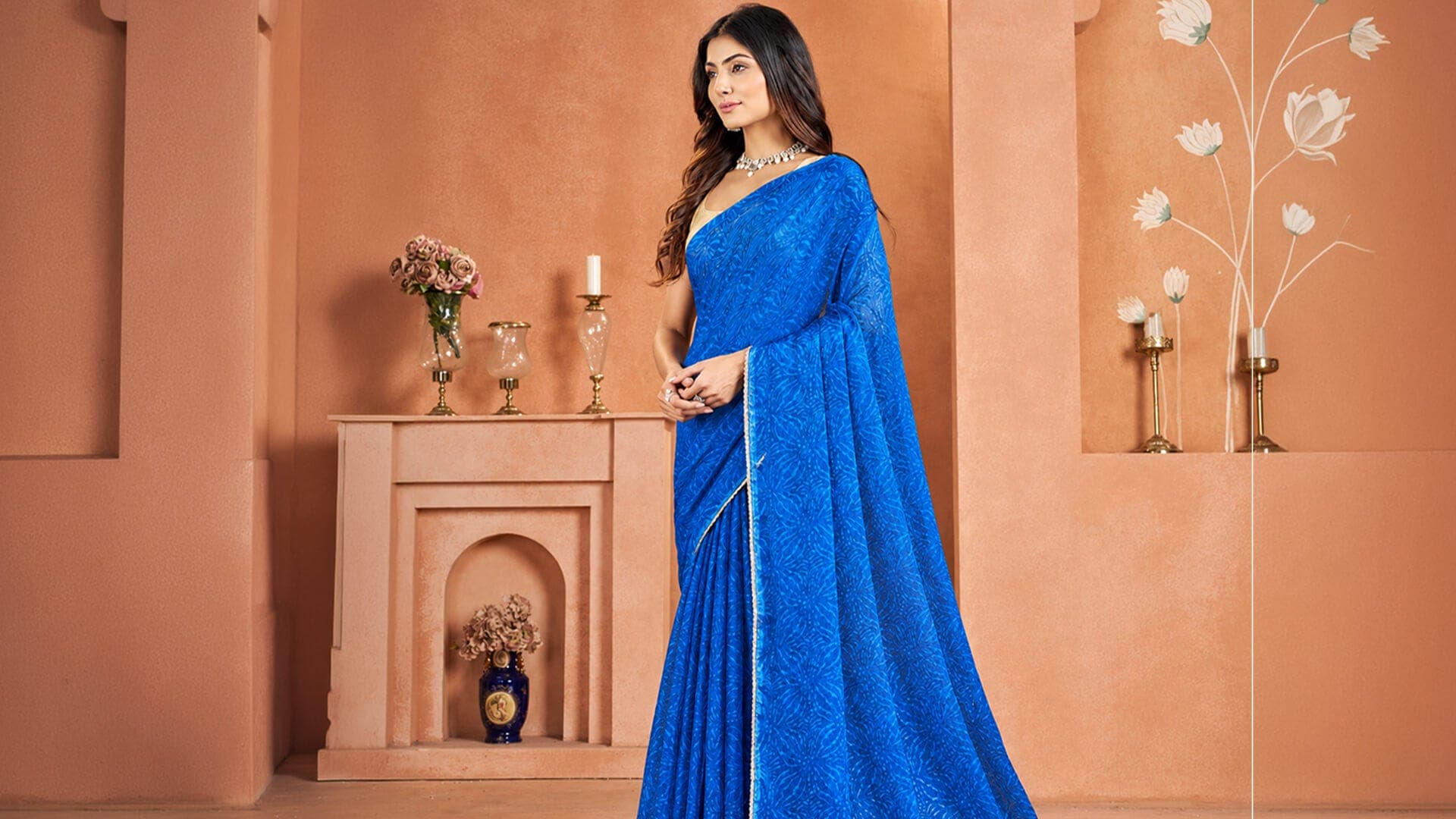

The types of saree fabric you choose can change almost everything about how a saree looks and feels. Fabric decides whether the pleats fall close to the body or hold their shape, whether the pallu feels fluid or structured, and how practical the saree is for the occasion. Among the major options are art silk, brasso, chiffon, crepe, crepe satin, cotton linen, georgette, linen, organza, Chanderi, satin and viscose.
That is also why two sarees with similar prints can look completely different once draped.
Light, fluid fabrics such as chiffon and georgette create a softer fall, while organza gives you more structure. Linen has a naturally textured character. Satin is known for its smooth, lustrous surface, while crepe has a distinctive textured finish. Art silk can recreate some of silk's visual richness using manufactured or regenerated fibres.
Understanding these different types of saree fabric makes shopping much easier. Instead of choosing on colour alone, you can ask a more useful question: how do I want this saree to drape?
This guide takes you through 9 common saree fabrics, what each feels like, how it falls and where it can work best.
Why Fabric Matters When Choosing a Saree
Fabric determines the saree's drape, texture, weight, maintenance needs and suitability for different occasions. A crisp fabric such as organza creates a more defined silhouette, while chiffon and georgette fall more fluidly. Linen can work beautifully for understated daytime dressing, whereas satin brings a noticeable lustre that suits evening wear.
Comfort also depends on fibre composition, weave, weight and finishing. That is why it is better to check the actual material rather than assuming every saree carrying the same broad fabric name will behave identically.
Types of Saree Fabric
Here are 9 types of fabric in saree collections worth understanding before choosing your next drape.
Art Silk Sarees
Art silk is a silk-inspired fabric made from manufactured or regenerated fibres such as viscose, rayon or blends. Depending on its composition, it can have a smooth feel, fluid fall and noticeable sheen. Art silk sarees work particularly well for festivals and family celebrations when you want a dressier look without choosing natural silk.

Brasso Sarees
Brasso is recognised by its textured patterns, created through a fabric-processing technique that leaves raised and sheer areas in the design. This gives the saree visual detail even without heavy embellishment. Brasso saree works nicely for parties, festive dinners and family occasions where you want the fabric itself to provide interest.

Chiffon Sarees
Chiffon is a lightweight, sheer fabric traditionally made from highly twisted yarns and now produced in several fibre compositions, including polyester. It creates a soft, fluid drape and relatively narrow pleats. Chiffon sarees suit dinners, celebrations and occasions where you want an easy-flowing silhouette.

Crepe Sarees
Crepe is known for its subtly crinkled or pebbled surface, created through yarn, weave or finishing techniques. It generally has more texture than satin while retaining a graceful fall. Crepe sarees can move comfortably between work events, family gatherings and evening plans depending on their print and detailing.

Crepe Satin Sarees
Crepe satin sarees combine characteristics of crepe and satin, typically giving the fabric a smoother, more lustrous face while retaining a fluid drape. It feels dressier than a matte crepe. Choose it for parties, dinners or festive evenings when you want shine without relying entirely on embellishment.

Cotton Linen Sarees
Cotton linen combines cotton and linen fibres in proportions that vary by fabric. The blend can bring together cotton's familiar softness with linen's characteristic texture and crispness. A cotton linen saree works particularly well for daytime occasions, work and understated gatherings where an unfussy drape feels appropriate.

Georgette Sarees
Georgette is a lightweight fabric made with highly twisted yarns and is recognised by its slightly grainy surface and fluid movement. Compared with chiffon, it generally has a little more body. Georgette sarees are useful for office celebrations, family functions and festive days that involve plenty of movement.

Satin Sarees
Satin refers to a weave rather than a single fibre. Its long surface floats create the smooth face and characteristic lustre associated with satin fabric. That shine catches artificial light beautifully, making satin sarees particularly effective for cocktail events, festive dinners and evening parties.

Viscose Sarees
Viscose is a regenerated cellulose fibre, commonly produced from processed wood-derived cellulose. It is known for its soft hand and fluid drape, although its exact behaviour depends on the fabric construction. Viscose sarees can work for casual gatherings, lunches and occasions where you prefer a softer, less structured fall.

How to Choose the Right Saree Fabric for the Occasion
For daily wear sarees, choose fabrics you already feel comfortable draping and caring for. Cotton linen, linen and simpler viscose styles can work well when you prefer an understated finish.
For office wear sarees, pick neat prints and manageable fabrics such as georgette, crepe, linen or cotton linen.
For party wear sarees, look towards satin, crepe satin, chiffon or dressier georgette, where fluid movement or surface lustre gives the outfit more presence.
For festive wear sarees, art silk, organza, Chanderi, brasso and richly finished versions of the other fabrics can all work. Let the event, time of day and amount of detailing guide the final choice.
How to Care for Different Saree Fabrics
Care should always begin with the label because fibre composition, dye, embellishment and finishing can change the cleaning requirements of two apparently similar sarees.
Fine organza, Chanderi and embellished art silk may require gentler handling or dry cleaning depending on the individual garment. Chiffon, georgette, crepe and satin should be protected from rough jewellery and sharp surfaces that can catch fine yarns. Cotton linen and linen may tolerate different cleaning methods, but washing instructions still vary.
Store every saree clean and completely dry, and avoid ironing delicate synthetic fabrics at unnecessarily high temperatures.
Shop Sarees by Fabric at Garden Vareli
Garden Vareli's textile story has long been connected with fabric and print. Its collections include sarees across georgette, chiffon, crepe, satin, organza, art silk, viscose and other fabric choices, giving you room to compare the fall and finish that work for your wardrobe.
Explore Garden Vareli sarees, then choose according to how you want the saree to feel, drape and fit into your plans.
Conclusion
There is no single "best" saree material. The right choice depends on the occasion, the drape you enjoy wearing and the amount of care you are comfortable giving it.
Use this guide to compare the different saree fabric options before you shop. Choose chiffon or georgette for a fluid fall, organza when you want structure, satin for lustre, linen for natural texture or art silk when the occasion calls for a dressier finish.
Start with the fabric. The colour and print become much easier to choose after that.
Frequently Asked Questions
01.What is the most comfortable saree fabric for daily wear?+
02.Which saree fabric is best for summer?+
03.What is the difference between crepe and crepe satin sarees?+
04.Which saree fabric is easiest to maintain?+
05.Which saree fabric is best for a wedding or festive occasion?+
06.Can I wear a printed saree in any fabric, or does it work better on some?+
end of story