
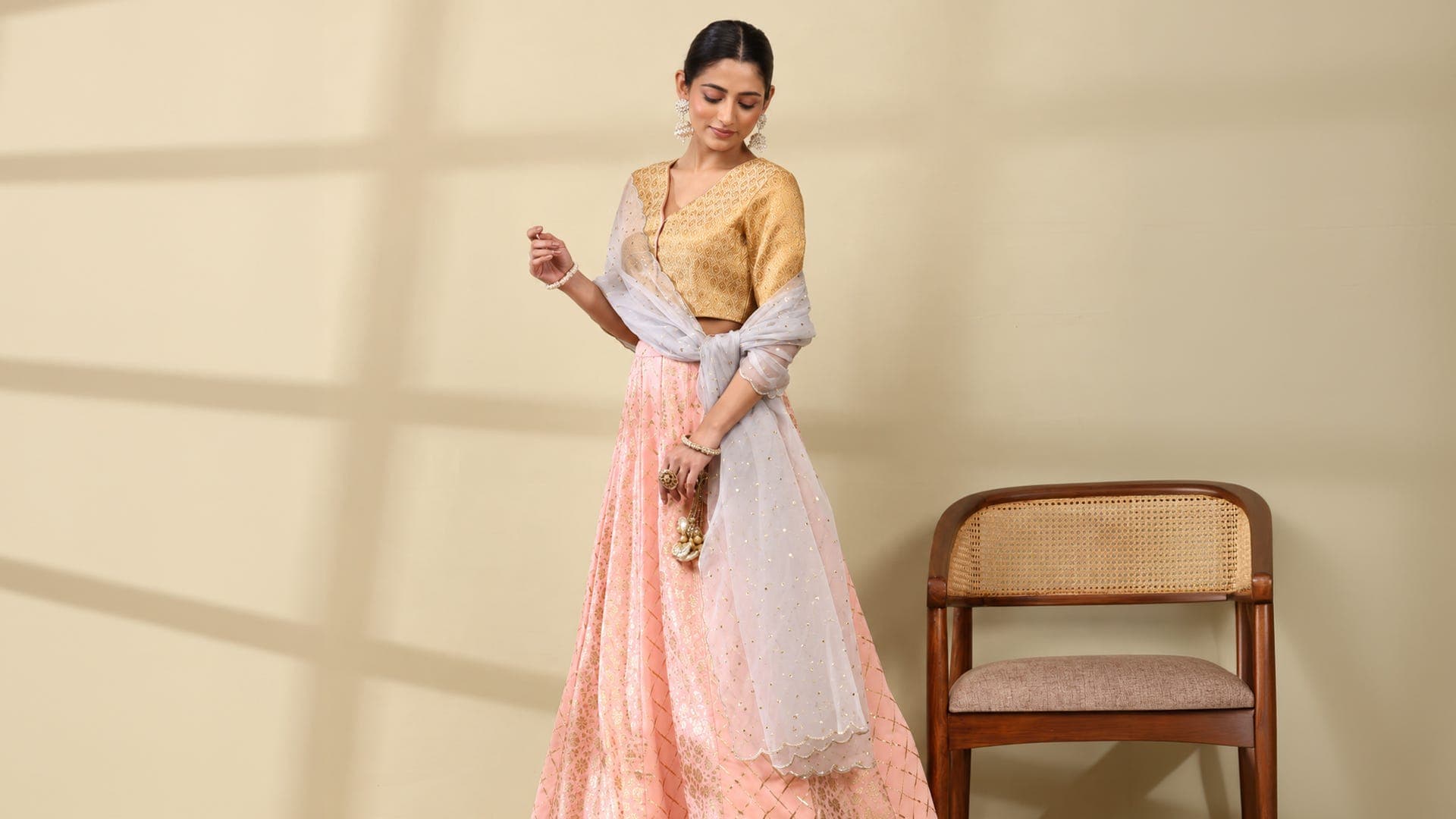

A lehenga-style saree drape spreads pleats around the waist to create a flared, skirt-like fall, with the pallu arranged over the shoulder or across the chest like a dupatta.
The result looks quite different from a regular saree, even though you're working with the same six yards of fabric.
If you've been wondering how to drape a saree in lehenga style, the trick lies in where you place the pleats. Instead of gathering them into one section at the front, you distribute them around the waist. That gives the lower half a fuller appearance, much like a lehenga skirt.
It's a lovely way to wear a saree differently for weddings, Sangeet nights and festive celebrations. Below, we'll go through the draping steps, suitable fabrics and a few styling details that help the finished look come together.
What Is a Lehenga-Style Saree Drape?
To understand how to wear a saree in lehenga style, picture a saree with its pleats arranged around the waist rather than gathered in one central section.
In the classic Nivi drape, the pleats fall together at the front, creating a relatively straight silhouette. The lehenga-style version spreads the folds around the waist, giving the lower half more volume. The remaining pallu is then styled like a dupatta.
This makes the drape particularly attractive for weddings and festive functions. You get the appearance of a lehenga while using a saree you may already own.
It works especially well with festive wear sarees. For occasion-specific styling, see the Wedding Guest Saree Ideas guide.
How to Wear a Saree Like a Lehenga: Step by Step
If you're searching for how to wear saree in lehenga style step by step, start with a fitted blouse, a securely tied petticoat and a few safety pins. Here's how to wear saree like a lehenga using five simple steps.
Step 1: Tuck the Saree and Take the First Wrap
Begin with the plain end of your saree, leaving the decorative pallu for later.
Tuck the upper edge into your petticoat at the right side of your waist. Bring the fabric around your body, completing one full wrap before returning to the front.
Keep the tuck secure but comfortable. The lower border should just clear the floor when you're wearing your intended footwear.
Check the length now. It becomes harder to correct once you've arranged the flare.
Step 2: Make Flared Pleats Around the Waist
Now comes the part that makes this drape look like a lehenga.
As you take the next wrap, make small, even pleats and tuck them individually around your waistband. Instead of gathering everything at the navel, spread the folds across the front, sides and back.
Allow them to fan out lightly towards the hem. The aim is a rounded, skirt-like fall rather than one narrow bunch of fabric.
Fluid georgette sarees can create a particularly soft flare.
Step 3: Pin the Pleats So the Flare Holds
Arrange the pleats and baste them at intervals along the waist band.
The fabric is spread around your waist so one pin at the front may not be enough. Pin further at the sides and wherever the folds appear likely to move.
Fasten the pins through the fabric and the waistband of the petticoat, taking care to conceal the pins.
Don’t pull the pleats too tightly. You want the folds to stay where they are, not lose their skirt shape.
Step 4: Drape the Pallu Like a Dupatta
With the lower half secured, turn your attention to the pallu.
You have two options. For a traditional look, pleat the pallu lengthwise and place it over one shoulder, allowing the decorative end to hang down.
Alternatively, bring it diagonally across your chest before securing it at the shoulder. This creates a more familiar dupatta-style arrangement.
Pin the pallu discreetly to your blouse and adjust its length.
Crisp organza sarees can give the pallu a more defined shape.
Step 5: Fan Out, Check the Fall and Adjust
Stand in front of a full-length mirror and look at the saree from all sides.
Are the pleats evenly spread? Does the hem sit at roughly the same height around your body?
Gently fan out any sections that appear crowded. If there's a gap or a loose fold, adjust the tuck and add a pin where needed.
Finally, walk a few steps and sit down briefly. The drape should feel secure without restricting movement.
Best Saree Fabrics for a Lehenga-Style Drape
Fabric makes a noticeable difference to the finished flare. Some materials hold a rounded shape, while others fall in softer folds.
Certain silk sarees have enough body to create defined pleats and a fuller skirt effect. The result depends on the silk's weave and weight, so a structured silk will behave differently from a very fluid one.
Satin has a smooth, lustrous surface and can give the lower half a polished fall. With satin sarees, pay particular attention to pinning because smoother fabrics may shift while you move.
For a softer silhouette, chiffon sarees are worth considering. Their lightweight construction creates flowing folds rather than a stiff flare.
Georgette is another useful choice when you want movement without too much volume.
If you're experimenting for the first time, pick a fabric you already feel comfortable handling.
How to Style a Lehenga-Style Saree
The blouse has a bigger role in this drape because the lower half already resembles a skirt.
A fitted blouse or traditional choli can bring definition to the waist. For weddings, choose a design with a neckline or sleeve detail that complements the saree rather than competing with its print.
A belt or waist chain can help define the silhouette and hold the pallu in place. Make sure it sits comfortably over the pleats.
Jewellery depends on the occasion. Statement earrings may be enough for a Sangeet, while traditional jewellery works nicely for a wedding ceremony.
Wear your chosen heels or flats before setting the hemline.
For a less formal celebration, fluid crepe sarees can create a softer version of the look.
Common Mistakes to Avoid
Too few pins: Pleats can loosen as you walk. Secure the folds at several points along the waistband rather than relying on one pin.
Pleats bunched at the front: This makes the saree look closer to a regular drape. Spread the folds around the waist for a fuller shape.
Saree too long: A dragging hem can spoil the flare and make walking difficult. Check the length with your footwear on.
Heavy pallu sliding: A weighty pallu may pull at the shoulder. Secure it properly and adjust its length.
Wrong petticoat: A loose waistband won't support the folds. Choose a well-fitted petticoat before you begin.
Shop Sarees at Garden Vareli
A lehenga-style drape can give an existing saree a completely different appearance. Garden Vareli's long textile experience, including its work with dyed and printed fabrics, brings variety to its saree collections.
Explore Garden Vareli's sarees for different colours, prints and fabric choices. If you prefer a more understated look, consider cotton linen sarees. You can also read the Types of Saree Fabric Guide before choosing a material.
Conclusion
A lehenga-style saree is all about changing the arrangement of the fabric. Spread the pleats around the waist, secure them at intervals and drape the pallu like a dupatta.
The fabric you choose will determine whether the finished look feels softly flowing or more structured.
Evenly distributed pleats, secure pinning and a well-arranged pallu create the lehenga-style silhouette.
Frequently Asked Questions
01.What is the lehenga style of draping a saree?+
02.Which saree fabric is good for lehenga style drape?+
03.Is it okay to wear a lehenga saree to a wedding?+
end of story